Turning Down the Volume: What Asia's Quietest Corners Are Doing to American Brains
Somewhere between your third Slack notification and the guy at the coffee shop who's apparently conducting his entire business life on speakerphone, something in you quietly breaks. Not dramatically. Just — enough. Enough that a growing number of Americans are booking flights not for beaches or bucket-list temples, but for something far less Instagrammable: the absence of sound.
It sounds almost embarrassing when you say it out loud. I flew to Kyoto for the quiet. But spend a week in the right neighborhoods of Japan or tucked into the slower corners of Southeast Asia, and you'll stop apologizing for it entirely.
The American Relationship with Silence Is... Complicated
Here's something worth sitting with: in the US, silence tends to make people nervous. Fill a pause in conversation and someone's already rushing to patch it. Open offices were designed on the premise that ambient noise signals productivity. Even our leisure — gyms, restaurants, grocery stores — pipes in music at volumes that seem engineered to prevent any actual thought from forming.
Psychologists have a name for this: noise as social signal. In American culture, busyness and noise are markers of relevance. If it's quiet around you, something might be wrong. You might be missing out. You might be, God forbid, alone with your own thoughts.
Contrast that with Japan, where silence in a shared space is often a form of respect — even intimacy. Or with certain parts of Laos and northern Vietnam, where the pace of daily life simply doesn't generate the kind of ambient roar we've come to accept as normal. The quiet there isn't an absence. It's a presence. And Americans, increasingly, are traveling specifically to find it.
What Remote Workers Started Noticing First
The post-pandemic wave of remote workers who relocated temporarily to Southeast Asia — Chiang Mai, Hoi An, Canggu — initially chased the usual draws: cheap cost of living, fast WiFi, good coffee. But a surprising number of them reported something they hadn't anticipated: their thinking changed. Not immediately. After a few weeks.
The working theory is neurological. Chronic noise exposure keeps the brain's threat-detection systems lightly activated almost constantly. You're not stressed, exactly — but you're not fully at rest either. Extended time in genuinely quieter environments allows that low-grade vigilance to ease off, and what floods in behind it is often described as clarity, creativity, or just an unusual ability to finish a sentence in your own head.
That's not nothing. That's actually quite a lot.
Kyoto: Where Silence Has an Architecture
Kyoto is not uniformly quiet — let's be honest about that upfront. The main tourist corridors around Fushimi Inari or the Gion district on a Saturday afternoon are as crowded and loud as any city center. The silence people come for requires a little navigation.
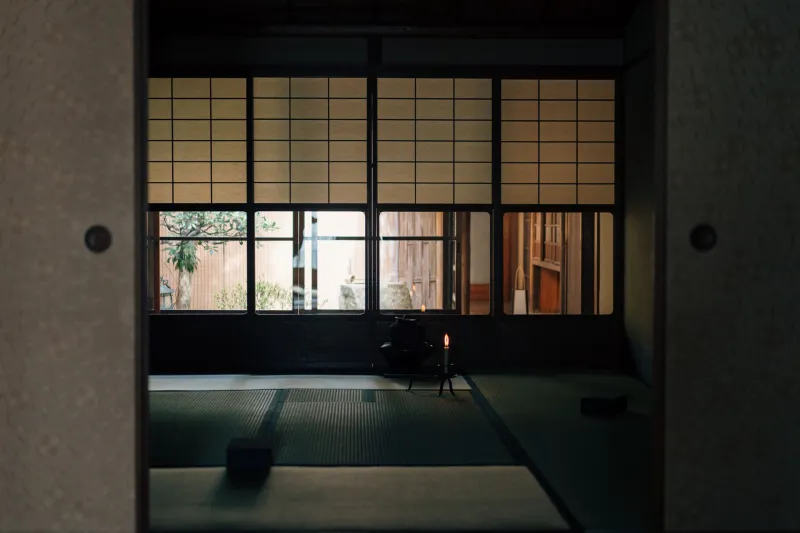
The real quiet in Kyoto lives in its machiya neighborhoods — the old wooden townhouse districts where streets narrow and foot traffic thins. Head to Nishiki Koji early on a weekday morning, before the market wakes up. Or walk the philosopher's path in late autumn when the leaf-peepers have gone home. The sound you'll hear is water, and wind, and occasionally your own footsteps on stone.
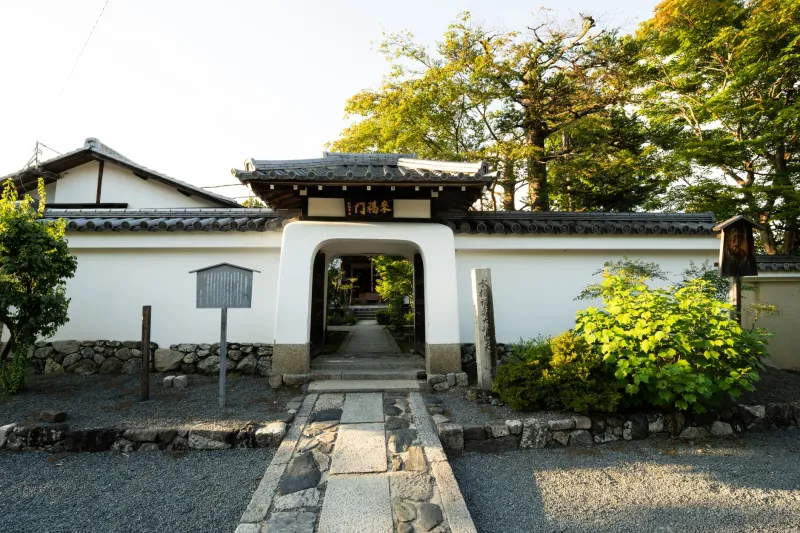
More deliberately, Kyoto's Zen temple gardens are engineered for silence in a way that's almost aggressive. Ryoan-ji's rock garden famously contains no birdsong, no fountain, no decorative rustling. Just raked gravel and fifteen stones arranged in a pattern no one has ever fully explained. Sitting there for twenty minutes without reaching for your phone is, for most Americans, genuinely difficult. Sitting there for forty minutes starts to feel like something else entirely.
The monks who designed these spaces understood something about attention that neuroscience is only recently catching up to: the mind needs friction-free emptiness to do its most interesting work.
Southeast Asia's Quiet Is a Different Animal
If Kyoto's silence feels curated — and it does, beautifully so — Southeast Asia's quiet tends to feel more accidental and, in some ways, more powerful for it.
Luang Prabang in Laos is the example everyone cites, and for good reason. The town sits at a river confluence, moves at a pace that seems indifferent to urgency, and has a cultural rhythm — particularly the early-morning alms-giving ceremony — that operates in near-total silence by community consensus. Tourists who talk or use flash photography during tak bat are gently but firmly redirected. The silence isn't a vibe. It's a practice.
Less talked about: the hill towns of northern Vietnam around Sapa, particularly outside peak season, where fog and altitude conspire to muffle sound in ways that feel almost physical. Or the older neighborhoods of Hoi An's ancient town after 9 PM, when the lanterns are still lit but the day-trippers have returned to their resort buses. Or a guesthouse in Kampot, Cambodia, where the main competition for your attention is the sound of the Kampong Bay River doing absolutely nothing in particular.
The common thread isn't geography. It's a cultural comfort with unoccupied sonic space that simply doesn't carry the social anxiety it does back home.
Finding It Without Accidentally Destroying It
Here's the uncomfortable part of writing a guide to quiet places: the moment enough people go looking for them, they stop being quiet. This is the paradox every travel writer eventually faces, and there's no clean answer to it.
What we'd suggest instead of a list of specific coordinates is a change in approach. The quiet in Asia isn't located at particular GPS points — it's found at particular times and through particular behaviors. Go earlier than you think you need to. Walk further from the marked trail than feels comfortable. Eat at places with no English menu and no photos on the wall. Stay somewhere with a courtyard instead of a lobby.
And — this is the hard one — leave the earbuds out. The number of travelers who seek silence and then immediately fill it with a podcast is genuinely staggering. The silence only works if you let it land.
What You Actually Discover
Most Americans who spend extended time in Asia's quieter spaces report a version of the same experience: the first few days feel uncomfortable, even boring. Then something shifts. Meals slow down. Observations sharpen. The compulsion to document everything — to post, to caption, to perform the experience for an audience — starts to feel slightly beside the point.
What replaces it is harder to name. Something like presence. Something like the sensation of actually being where you are, rather than narrating it in real time to people who aren't there.
That's not a small thing to bring home. Even if home is still loud.