Cracked, Faded, and Perfectly Fine: How Japan's Wabi-Sabi Philosophy Is Quietly Dismantling American Perfectionism
Somewhere between the Instagram grid and the Pinterest board, between the Peloton streak and the color-coded meal prep containers, a lot of Americans quietly broke. Not dramatically — no single moment, no obvious catalyst. Just a slow, grinding exhaustion from the relentless project of having everything look exactly right.
Japan noticed. Or rather, Japan never had that problem to begin with.
Wabi-sabi — the centuries-old Japanese aesthetic rooted in finding beauty in impermanence, incompleteness, and imperfection — is having a genuine cultural moment in the West. But calling it a trend undersells it. For the travelers who've encountered it firsthand in Kyoto's moss-covered stone gardens or in the deliberately uneven glaze of a hand-thrown tea bowl, it feels less like a design philosophy and more like a permission slip.
What Wabi-Sabi Actually Means (And What It Doesn't)
Let's clear something up: wabi-sabi is not the same as "rustic chic." It's not shiplap walls or deliberately distressed furniture from a big-box store. The concept runs much deeper than aesthetics, even if aesthetics are where most Westerners first encounter it.
The term fuses two ideas. Wabi originally referred to the loneliness of living in nature, away from society — later evolving to suggest a kind of quiet, spare beauty found in simplicity. Sabi speaks to the beauty that comes with age and wear, the way a patina tells a story. Together, they describe an entire worldview: that nothing lasts, nothing is finished, and nothing is perfect — and that this is not a problem to be solved.
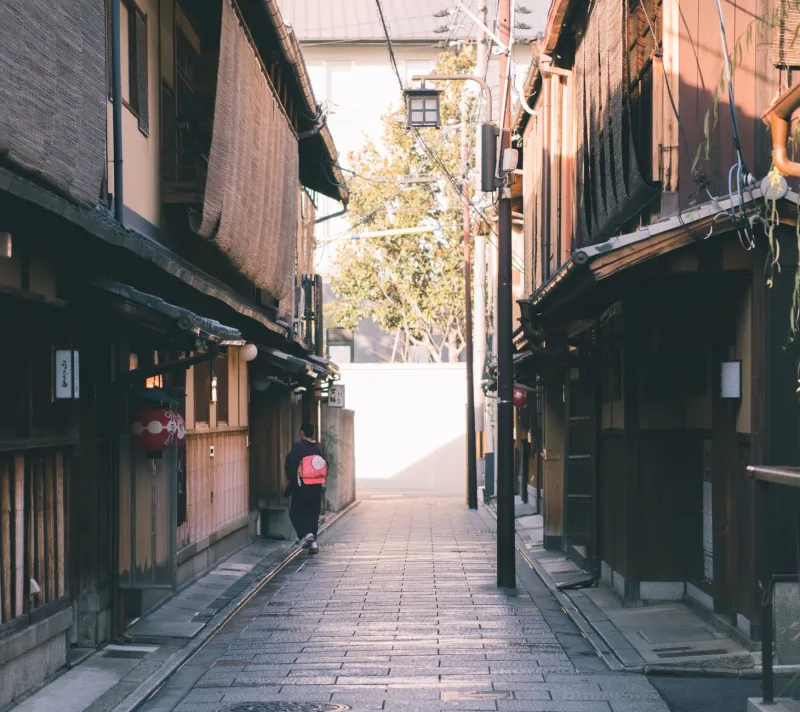
In Kyoto, you feel it everywhere once you know to look. The raked gravel of Ryoan-ji's famous rock garden, deliberately asymmetrical. The hand-stitched kintsugi ceramics in craft shops along Nishiki Market, where broken pottery is repaired with gold lacquer — the cracks highlighted rather than hidden. The moss that's allowed to colonize temple steps, soft and irregular, indifferent to a gardener's ambitions.
"I kept waiting for everything to be manicured," says Dana Kowalski, a graphic designer from Portland who spent three weeks in Kyoto last spring. "Back home, 'beautiful' means polished, symmetrical, controlled. In Kyoto, the most stunning things I saw were just... worn. Honestly worn. And nobody was apologizing for it."
The American Allergy to Imperfection
It's worth asking why this hits so hard for so many Americans. The answer probably starts with the cultural obsession with optimization — a word that has quietly colonized every corner of modern life, from morning routines to retirement portfolios to how we parent.
The pressure isn't just about looking good. It's about performing competence, projecting control, signaling that you have your life together at all times. Social media amplified something that was already there, but the roots go deeper: a cultural story that equates effort with worth, polish with success, and any visible crack with failure.
Wabi-sabi offers a direct challenge to all of that. Not a gentle suggestion — a full philosophical refusal.
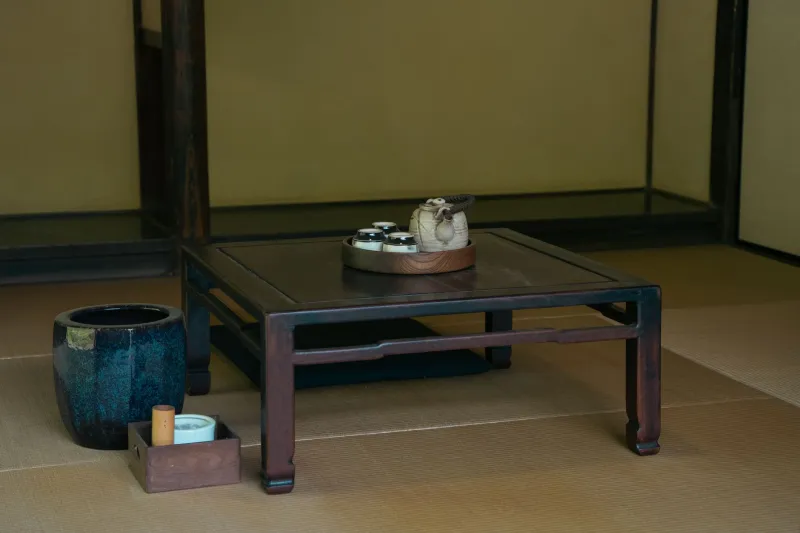
"There's this moment in the tea ceremony where you really get it," says Marcus Reyes, a high school teacher from Austin who studied chado — the Japanese way of tea — during a sabbatical year in Japan. "The bowl you're handed might be hundreds of years old, visibly repaired, slightly lopsided. And the whole point is that you hold it with reverence anyway. You're not being asked to overlook the imperfections. You're being asked to find them beautiful. That's a completely different ask."
What It Looks Like in Practice
For travelers who want to do more than read about wabi-sabi and actually feel it, Kyoto is the obvious starting point — but Southeast Asia offers its own related entry points.
In Kyoto, the Philosopher's Path in autumn is a masterclass in impermanence: leaves dropping without ceremony, the canal surface broken and scattered. The pottery workshops in the Kiyomizu-dera neighborhood let visitors try their hand at hand-building ceramics, and the instructors will tell you plainly that the wobble in your bowl is not a mistake. In Arashiyama, the bamboo groves sway and creak in ways that feel distinctly unresolved, unfinished — and completely alive.
In Southeast Asia, the sensibility appears differently but recognizably. The weathered temple walls of Bagan in Myanmar, the faded French-colonial facades of Hanoi's Old Quarter, the hand-woven textiles of northern Thailand where imperfect thread tension is considered a mark of authenticity — all of it carries a similar message: age is not decay. It's evidence of a life actually lived.
Back in the US, the philosophy is finding its way into interior design, slow fashion, and even therapy circles, where therapists are increasingly using wabi-sabi as a framework for helping clients release perfectionism. But the practitioners who've absorbed it most deeply tend to be those who encountered it in context — not through a book, but through a place.
The Harder Lesson
Here's the part that doesn't make it onto the mood board: wabi-sabi isn't just about accepting a dented vase. It's about accepting a dented life. The unfinished career pivot, the relationship that ended without resolution, the body that doesn't look the way it did at 28. The philosophy asks you to look at all of that and find it not just acceptable, but genuinely, specifically beautiful — because it's real, because it's yours, because it's here right now and won't be forever.
That's a harder ask than buying a hand-thrown mug from Etsy.
"I came back from Kyoto and I kept trying to explain it to people," Dana says. "I'd say, 'I think I stopped needing things to be perfect.' And they'd nod like I was describing something small. But it didn't feel small. It felt like I'd put down something really heavy."
Maybe that's the most honest travel souvenir you can bring home from Japan — not a physical object, but a loosened grip. The quiet, radical idea that the crack in the cup is not where the beauty leaked out. It's where the beauty got in.