Less Menu, Better Meal: How Asia's Culture of Restraint Is Curing American Decision Fatigue
There's a ramen shop in Kyoto's Fushimi ward that has been serving exactly one broth for thirty-seven years. No seasonal specials. No customization options. You sit down, you get the bowl, you leave changed. The owner, a compact man in his sixties who communicates mostly through nods, once told a translator that adding choices would only mean making worse ones.
That sentence has lived rent-free in my head ever since.
Back home in the US, we treat options like oxygen. More is proof of care, of generosity, of competence. A restaurant with a four-page menu signals abundance. A job with unlimited growth paths signals opportunity. A wardrobe with fifty shirts signals personality. But somewhere between the third scroll through Netflix and the fourteenth tab open on your browser, the abundance stops feeling like freedom and starts feeling like a slow suffocation.
Asia — and Kyoto in particular — has been quietly solving this problem for centuries. The solution isn't a productivity hack or a morning routine. It's a philosophy baked into the architecture, the food culture, the aesthetic tradition, and the way people move through their days.
The Design Is the Decision
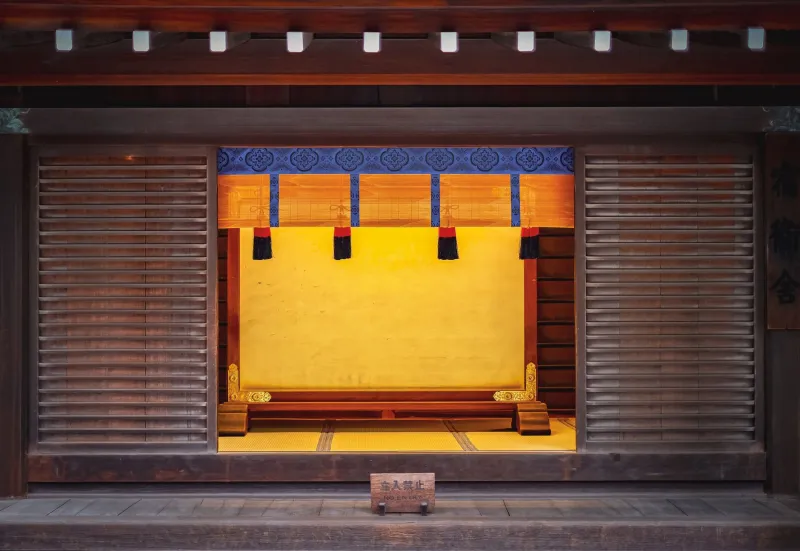
Kyoto's traditional machiya townhouses are a good place to start. These narrow wooden structures, some dating back several hundred years, don't give you many choices about how to live inside them. The layout decides your morning for you. Where you sleep, where you eat, where you sit — it's all prescribed by the space itself. Rooms are multifunctional, which sounds limiting until you realize that multifunctionality actually removes the daily negotiation of how to use a room. You stop asking the question.
This is what designers call "decision architecture" — the idea that your environment can absorb certain choices so your brain doesn't have to. In Kyoto, it isn't a design trend. It's just how things were built.
Travel further south into Thailand, Vietnam, or Bali, and you see the same principle operating at a different scale. Street food vendors who have sold the same three dishes for decades. Market stalls organized with a specificity that makes comparison shopping almost beside the point. The clarity isn't laziness. It's mastery. When you narrow your scope, you deepen your craft.
What Overthinking Actually Costs
American psychologist Barry Schwartz famously called this the "paradox of choice" — the uncomfortable truth that more options produce not more satisfaction, but more anxiety, more second-guessing, and more regret. We've absorbed this concept intellectually, but most of us haven't figured out what to actually do about it.
Travelers who spend real time in Kyoto or Southeast Asia often come back reporting something unexpected: the relief of constraint. Not the boredom of it, but the genuine, physiological exhale that comes from not being asked to decide so many things.
One remote worker I spoke with, a UX designer from Portland who spent four months based in Chiang Mai, described it this way: "I started eating at the same two spots every day because they were close and good. At first it felt boring. By week three I realized I had all this mental energy I didn't know I'd been spending on lunch."
That reclaimed energy went into her actual work. She shipped more in those four months than she had in the previous year.
The Capsule Wardrobe Was Always a Kyoto Thing
If you've ever fallen down the capsule wardrobe rabbit hole on Reddit or Pinterest, you've essentially been studying Japanese aesthetics without knowing it. The idea — a small, intentional collection of clothes that all work together — mirrors the ma principle in Japanese design, where negative space is treated as an active element rather than an absence.
In practical terms, Kyoto locals often dress with a consistency that Americans might mistake for monotony. Neutral tones, quality fabrics, minimal pattern. But watch more carefully and you start to see the nuance operating at a finer level — the way a sleeve is folded, the texture of a fabric, the proportion of a collar. The restraint at the macro level creates the space for sophistication at the micro level.
This is the trade American overthinkers rarely consider: every dollar of cognitive energy you spend on big, obvious decisions is a dollar you can't spend on subtle, meaningful ones.
How to Actually Use This When You Get Home
Here's where it gets practical. You don't need to move to Kyoto or open a one-dish restaurant to apply this. What you can do is borrow the underlying logic.
Shrink the menu before you order. Whether it's a career decision, a creative project, or what to cook for dinner — artificially limit your options before you evaluate them. Give yourself three choices maximum. The constraint forces prioritization, which is the actual skill you're trying to build.
Let your environment decide for you more often. This is the machiya principle. Set up your space so the default behavior is the right one. Put your running shoes by the door. Keep only the ingredients for meals you actually want to cook. Design your workspace so the first thing you see is the most important thing you need to do.
Develop a few repeatable routines and protect them. In Kyoto's craft districts, the most respected artisans have morning rituals that are almost liturgical in their consistency. The routine isn't rigidity — it's a container that holds the chaos out while the real thinking happens inside.
Stop optimizing things that don't need optimizing. Southeast Asian food culture is instructive here. A great bowl of pho doesn't need to be "elevated." A perfect papaya salad doesn't need a modern interpretation. Knowing when something is already good enough — and stopping there — is a discipline, not a failure of imagination.
The Quiet Confidence of Knowing What You Want
There's a particular kind of ease you notice in people who have narrowed their lives with intention. You see it in the Kyoto ceramicist who has made the same style of cup for twenty years and shows zero interest in pivoting. You see it in the Hội An tailor who could probably expand into ready-to-wear but doesn't, because custom-fit is the whole point.
It's not complacency. It's the opposite — it's the radical clarity that comes from having already done the hard work of deciding what matters.
For Americans conditioned to treat every closed door as a failure, that kind of focus can look like limitation. Spend enough time watching how it actually operates, though, and it starts to look like the most sophisticated form of decision-making there is.
The ramen shop owner in Fushimi isn't serving one broth because he couldn't think of another. He's serving one broth because he thought long and hard, and that was the answer.
That's not nothing. That's everything.