Open Doors, Open Tables: What Southeast Asia's Radical Welcome Is Really Saying About Us
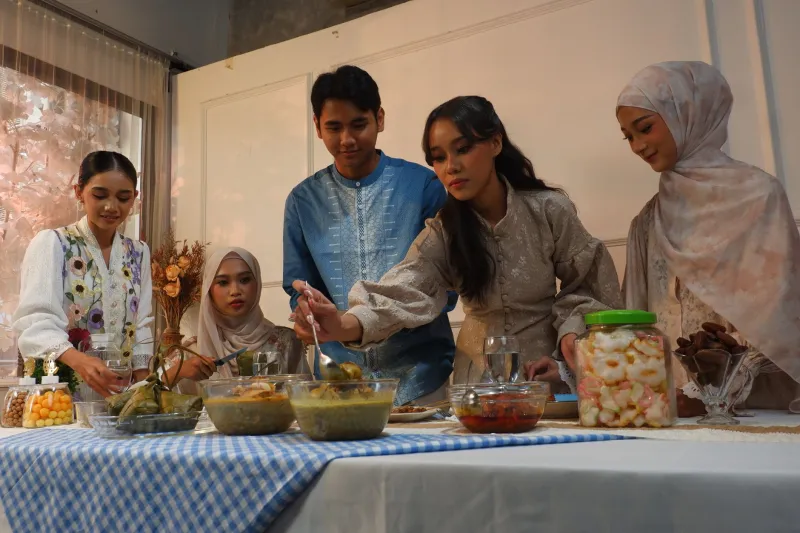
The first time a guesthouse owner in Hoi An invited me to sit down for family dinner — not as a paid upgrade, not as a curated cultural experience, just because the food was ready and there was room — I almost said no. My instinct was to deflect politely, cite some fake plan, and retreat to the safety of a restaurant where the transaction was clean and the expectations were clear.
I stayed. And somewhere between the second bowl of rice and a conversation about her daughter's school exams, I started to understand that my discomfort wasn't about the food or the language barrier. It was about something I'd carried across twelve time zones from home.
The Welcome That Doesn't Ask Permission
Southeast Asian hospitality — whether you encounter it in a Chiang Mai market stall, a Balinese family compound, or a cramped Hanoi coffee shop — operates on a fundamentally different social logic than what most Americans grow up with. It doesn't wait for the right moment. It doesn't hedge. It extends itself outward, toward the stranger, without first calculating the risk.
In the United States, we tend to treat openness as something earned over time. You build trust incrementally. You don't invite someone into your home until you know them well enough. You don't ask personal questions until there's an established rapport. These aren't bad instincts — they reflect real social pressures and, frankly, a culture that has learned to protect itself in specific ways. But they also mean that genuine connection often gets deferred indefinitely, buried under layers of politeness that function more like armor than courtesy.
In Vietnam, Laos, Cambodia, and across much of the region, the logic runs in reverse. Trust, or at least a provisional version of it, is extended first. The burden isn't on the stranger to prove themselves worthy of warmth. The warmth comes first, and the relationship — if there is one — grows from there.
What the Street Vendor Already Knows About You
Spend enough time in Southeast Asia and you'll notice that people ask questions Americans flag as intrusive almost immediately: How old are you? Are you married? Why not? How much do you earn? Do you have children?
These aren't rude. They're connective. They're the conversational equivalent of reaching across a table — an attempt to locate you in the world, to find the shared human coordinates that make a stranger less strange. The questions aren't about data collection. They're about belonging.
Back home, we've largely scrubbed these questions from acceptable small talk, partly out of genuine respect for privacy, and partly because we're deeply uncomfortable with the vulnerability they imply. Answering honestly — admitting you're thirty-eight and still figuring things out, or that your marriage is complicated, or that you're not sure what you're doing with your life — requires a kind of exposure that American social culture doesn't always make room for.
The street vendor in Luang Prabang who asks if you've eaten yet and then hands you something to try isn't just being generous. She's modeling a relationship with risk that most of us have quietly forgotten how to practice.
The Calculus of Vulnerability
Here's the uncomfortable part: a lot of what we call caution in American social life is actually fear dressed up as wisdom. Fear of being taken advantage of. Fear of being seen as naive. Fear of what it means to need something from another person, or to offer something without knowing exactly how it will land.
Southeast Asian hospitality doesn't eliminate those risks. Family-run guesthouses can overcharge. Street vendors can sense a tourist and adjust accordingly. Warmth is not the same as naivety, and generosity doesn't make anyone immune to the ordinary complications of human nature. But the cultural baseline — the assumption that openness is the right starting point, even knowing it sometimes backfires — reflects a fundamentally different relationship with vulnerability.
In Kyoto, this shows up differently but points to the same thing. The meticulous care of a ryokan host, the way a shopkeeper wraps your purchase like it matters, the deliberate attention paid to your comfort without ever making it feel transactional — it's another form of radical presence, another way of saying: you are worth attending to, right now, as you are.
Americans often interpret this kind of care as performance. We look for the catch. We wonder what it's costing them, or what they want in return. And sometimes that skepticism is healthy. But more often, it's a mirror — reflecting back the exhaustion of living in a culture where every exchange carries an implicit ledger.
What Happens When You Actually Let Someone In
Travelers who spend real time in Southeast Asia — not just the highlights reel, but the slow afternoons in guesthouses and the long bus rides and the meals that stretch into evening — often come home changed in a way that's hard to articulate. They use words like open and lighter and more themselves. What they're describing, I think, is what happens when you practice vulnerability in a context where it's actively met rather than quietly penalized.
You let someone feed you. You answer the nosy question honestly. You admit you're lost, or confused, or moved by something you can't explain. And the world doesn't end. The person across from you doesn't exploit the admission — they lean in.
That experience doesn't fix anything back home. The structural reasons Americans guard themselves aren't imaginary, and a two-week trip to Bali isn't a substitute for the kind of social infrastructure that makes openness feel safe on a daily basis. But it does something subtler and maybe more durable: it reminds you that the guardedness is a choice, and that choosing differently — even occasionally, even imperfectly — is still available to you.
Bringing It Back
The most useful thing Southeast Asian hospitality offers American travelers isn't a lesson in how other cultures do it better. It's a question: What would you do if you weren't afraid?
Would you invite the neighbor you've nodded at for three years in for coffee? Would you answer honestly when someone asks how you're doing? Would you offer help without waiting to be asked, or accept it without immediately calculating what you owe?
The guesthouse owner in Hoi An wasn't trying to teach me anything. She was just making dinner and there was room at the table. But I've thought about that evening more times than I can count — not because it was dramatic, but because it was so simple, and because I almost missed it entirely.
Sometimes the most radical thing a place can show you is just how small the thing you're afraid of actually is.