When the Wall Is the Exhibit: What Kyoto's Breathing Museums Reveal About American Overload
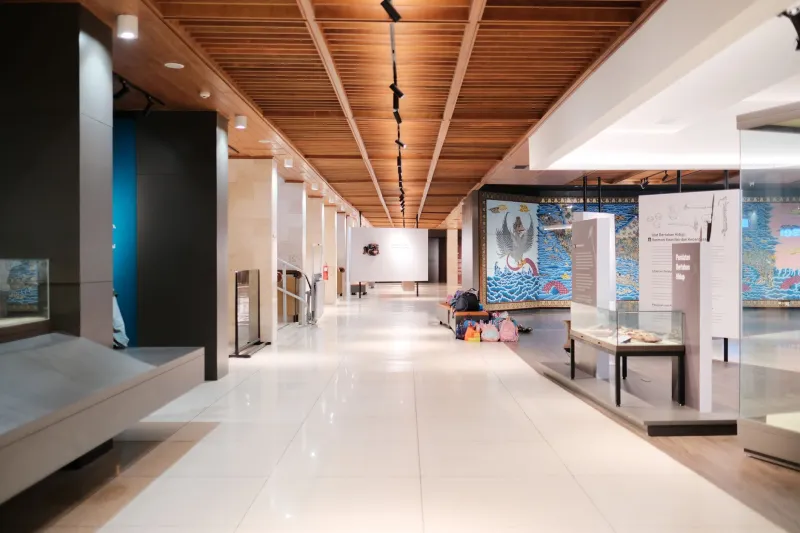
Walk into the Metropolitan Museum of Art on a Tuesday afternoon and you will be assaulted — lovingly, impressively, exhaustingly — by everything. Paintings shoulder to shoulder. Placards explaining what you're feeling before you've had a chance to feel it. Audio guides narrating your experience back to you in real time. By the third gallery, your brain has quietly filed for bankruptcy.
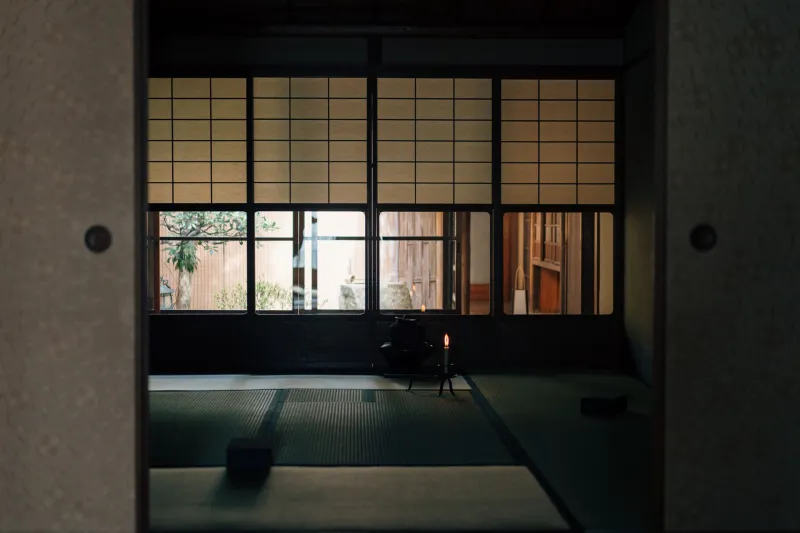
Now picture a different kind of room. A single ceramic bowl resting on a low platform. One window. Natural light that shifts as clouds pass. Nothing on the walls. No explanation. Just the bowl, and you, and the particular silence that forms between the two.
That's not an art installation concept or a minimalist design trend. That's a Tuesday afternoon at some of Kyoto's most quietly radical cultural spaces — and once you've stood inside one, the Met starts to feel like a very beautiful airport.
The Idea Behind the Emptiness
The Japanese concept of ma (間) doesn't translate cleanly into English, which is probably part of why it's so hard to import. The closest approximation is something like "meaningful interval" or "conscious pause" — but those phrases flatten it. Ma is the space between notes in music, the gap between spoken words, the deliberate nothing that gives the something beside it room to exist. It's absence treated as a design element with as much intention as any object or color.
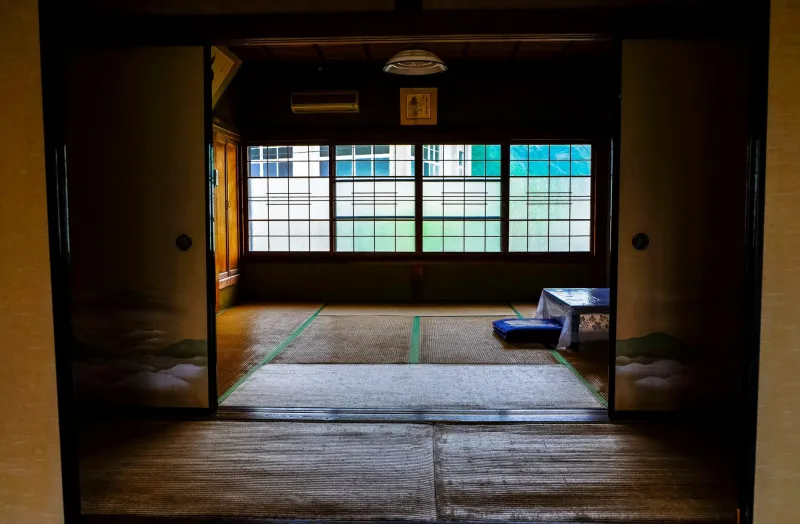
In Kyoto's museum culture, ma shows up everywhere once you know what you're looking at. Rooms that Western curators would consider "underutilized" are understood locally as calibrated. A scroll painting hung in an otherwise empty alcove isn't lonely — it's amplified. The surrounding silence functions like a frame, directing attention inward rather than outward.
This is a fundamentally different theory of engagement than the one most American museums operate on. The Western gallery tradition, broadly speaking, assumes that more context produces better understanding. More objects produce broader perspective. More wall text produces deeper appreciation. The logic is generous and not entirely wrong — but it carries a hidden cost.
What Overexplanation Actually Does to Us
There's a reason people joke about reading every museum label and retaining nothing. When information is ambient and constant, the brain starts treating it as background noise. You stop seeing the object and start reading about the object, which is a completely different cognitive activity. The artifact becomes an illustration for its own Wikipedia entry.
Kyoto's approach inverts this. By stripping away explanation, the museums in and around the city force a kind of uncomfortable intimacy with whatever is in the room. You can't defer to a label. You can't let an audio guide process the experience on your behalf. It's just you and the thing, and whatever happens between you is yours.
This sounds simple. It is not simple. American visitors — and this is something you hear repeatedly from travelers who've done both circuits — often describe the first hour in a spare Kyoto exhibition space as mildly anxious. There's a trained reflex to look for guidance, and when guidance isn't there, the nervous system briefly panics. Am I doing this right? What am I supposed to think?
That panic is, arguably, the entire point.
A Few Spaces Worth Seeking Out
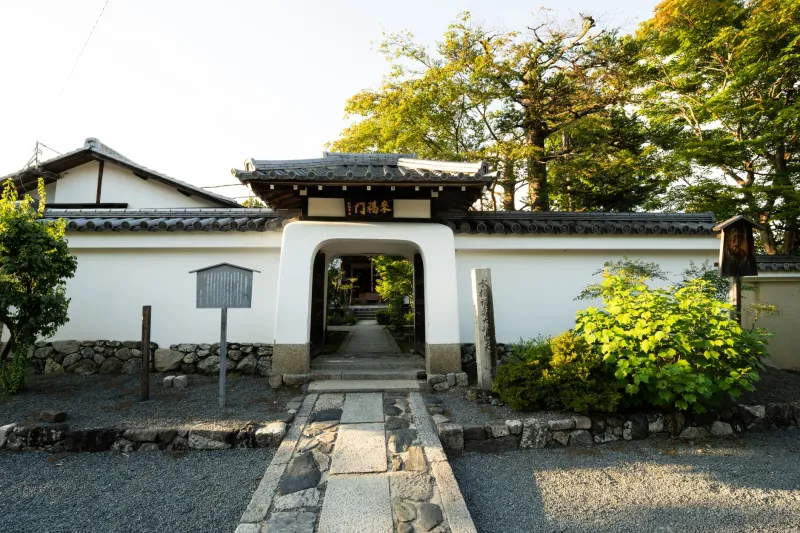
You don't have to travel far from central Kyoto to find this philosophy in practice. The Hosomi Museum, tucked into the Okazaki district, is a masterclass in restraint. Exhibitions tend to feature a small number of works — Japanese paintings and decorative arts — given room to breathe in ways that feel almost theatrical in their generosity. The building itself is calm, the lighting considered, the pace entirely your own.
The Raku Museum, dedicated to the tea bowls of the Raku family lineage, takes this further. The objects on display are simple, rough-edged, and deliberately imperfect — a direct expression of wabi aesthetics — and the space around them is almost meditative. There are no crowds jostling for position. There is no Instagram moment engineered into the layout. There is a bowl. There is quiet. There is time.
Even some of Kyoto's temple treasure houses operate on this register. Walk into the repository at Ryoanji or certain inner halls at Ninnaji on a slow morning, and you'll encounter objects displayed with a kind of curatorial confidence that says: this doesn't need us to explain it to you.
What American Collectors and Designers Could Actually Take From This
The influence of ma on contemporary design is already visible in the US — in high-end residential interiors, in certain gallery spaces in New York and Los Angeles, in the visual language of luxury brands that have learned to let negative space do heavy lifting. But it tends to get absorbed as an aesthetic rather than a philosophy, which is a meaningful distinction.
Aesthetically, ma looks like minimalism. Philosophically, it's something else — it's a claim about what presence actually requires. The idea isn't that less is more in a decorative sense. It's that objects, like people, need room to be themselves. Context can illuminate, but it can also crowd. Explanation can assist, but it can also substitute for experience.
For American collectors building private spaces, or designers working on cultural institutions, the Kyoto model offers a genuine provocation: what would it mean to trust the object? To trust the visitor? To build a room where the absence of instruction is itself a form of respect?
These aren't rhetorical questions. Some of the most interesting museum renovation conversations happening right now in the US — particularly around Indigenous art and artifacts, where Western labeling traditions have often done real damage — are circling exactly this territory. The idea that an object might carry meaning that resists or exceeds explanation is not uniquely Japanese. But Kyoto has been practicing it longer and with more institutional commitment than almost anywhere else.
The Souvenir You Don't Expect
Most people who visit Kyoto come back talking about the food, the temples, the gardens. Fewer come back talking about the museums — partly because the museums don't announce themselves loudly, which is, again, the point.
But spend an afternoon in a room designed around ma, and something shifts. You start noticing the silences in your own life differently. The pause before someone answers a question. The empty corner of a room you've been meaning to fill. The moment after a song ends, before the applause.
Kyoto's museums won't tell you what to take from them. That's the whole idea. But if you let the emptiness work on you, you might find yourself coming home with something harder to name than a souvenir — a slightly different understanding of what it means to pay attention.