Why Asian Gardens Don't Finish Their Sentences — And Why That's the Whole Point
There's a particular kind of discomfort that settles in when you're standing in front of Ryōan-ji's famous rock garden in Kyoto and your brain just... keeps waiting. Waiting for the pattern to reveal itself. Waiting for the meaning to click into place. Waiting for someone — a sign, a pamphlet, a friendly docent — to just tell you what it means.
That discomfort? Entirely intentional.
"The garden is not withholding from you," says Hiroshi Tanaka, a Kyoto-based landscape designer who has spent two decades restoring traditional karesansui — dry rock gardens — across the Kansai region. "It is inviting you to stay in the question. Most Western visitors have never been invited to do that before."
For American travelers especially, raised in a cultural context that prizes resolution — the satisfying plot twist, the fully explained infographic, the before-and-after renovation reveal — encountering a space that deliberately refuses to conclude can feel almost rude. But across Kyoto's temple gardens and Southeast Asia's sculpted landscapes, that refusal is the whole architecture.
The Space Between Things Has a Name
In Japanese aesthetics, the concept is called ma — a word that translates loosely as "negative space" or "pause," but that neither translation fully captures. It's the silence between notes in a piece of music. The gap between stepping stones. The patch of raked gravel that surrounds a rock without explaining why the rock is there.
Ma isn't emptiness in the Western sense, where a blank space signals something missing. It's emptiness as active presence — a breathing room that gives meaning to everything around it.
Tanaka describes it this way: "If I place a stone and immediately tell you what it represents, I have stolen something from you. The moment of not-knowing, that is where you actually meet the garden."
This philosophy shows up not just in Kyoto's Zen temple gardens but across Southeast Asia, where the logic of incompleteness runs through Balinese water temples, the terraced rice fields of northern Thailand, and the moss-draped ruins of Angkor. These are spaces that were designed to be read slowly, partially, and always with something left over.
What Travelers Actually Feel
Marcela Reyes, a landscape architect from Portland who visited Kyoto last spring, described her first encounter with the garden at Daitoku-ji as "almost annoying."
"I kept trying to find the focal point," she said. "In American garden design, you're always drawing the eye somewhere — there's a destination. Here, the garden kept redirecting me back to... nowhere in particular. I felt like I was failing at looking at it."
She wasn't failing. She was, in fact, doing exactly what the garden was built for.
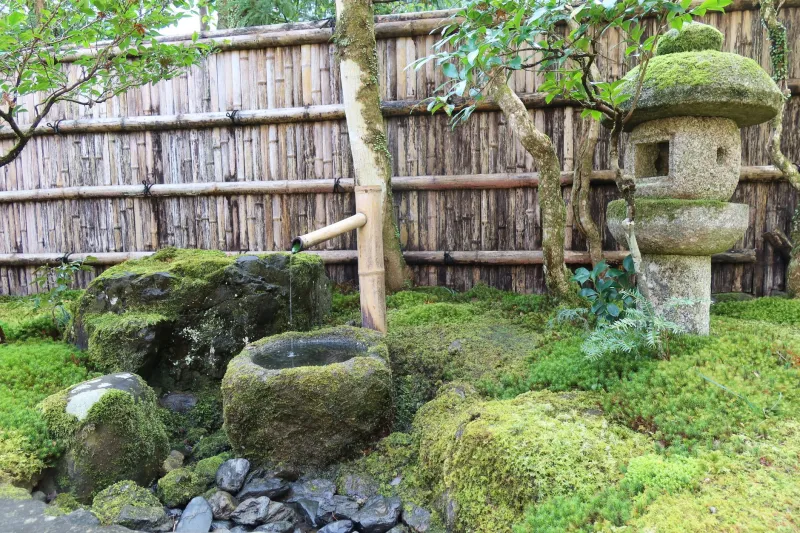
After two days of visiting different temple gardens, something shifted. "I stopped trying to extract meaning and just started noticing," Reyes said. "The way the light hit the moss differently every twenty minutes. The sound of water I couldn't see. By the end, I was genuinely sad to leave — and I couldn't explain why, which felt very fitting."
That inability to explain is, paradoxically, the souvenir. The garden had given her an experience that resisted being packaged into an Instagram caption or a dinner party anecdote. It stayed unresolved, and it stayed with her.
Southeast Asia's Version of the Unfinished
The philosophy of productive incompleteness isn't uniquely Japanese. Travel a few thousand miles south and you'll find it woven into the landscape design traditions of Bali, where the concept of Tri Hita Karana — harmony between humans, nature, and the spiritual world — produces gardens that are explicitly designed to remain in conversation with forces beyond human control.
I Wayan Sujana, a Balinese landscape guide based in Ubud, explains that traditional Balinese gardens are never considered "done." "A garden that is finished is a garden that has stopped breathing," he says. "We plant knowing the garden will change, that the rains will move things, that offerings will decompose and become soil. The incompleteness is the life."
In practical terms, this means you'll often find Balinese temple gardens with deliberate asymmetries, plants allowed to grow past tidy boundaries, and stone paths that end without ceremony at the edge of a rice field. To a visitor expecting the manicured predictability of, say, a botanical garden in Chicago, it can look unfinished. That's because it is — and that's entirely by design.
Why This Hits Americans Differently
It's worth asking why this particular quality — the intentional open-endedness of Asian garden design — lands so distinctly for American visitors. Part of it is cultural: the US has a deep, almost structural relationship with resolution. Stories should have endings. Problems should have solutions. Spaces should have purposes.
But there's also something specific to how Americans have learned to consume travel. The rise of hyper-curated itineraries, bucket-list culture, and the pressure to "see everything" on a trip means many visitors arrive at places like Kyoto's gardens already in extraction mode — trying to get the experience, document it, and move on.
A garden built on ma short-circuits that approach almost immediately. You can't extract something that's designed to be inexhaustible. You can't caption a silence.
"American visitors often tell me they feel guilty sitting in the garden doing nothing," Tanaka says, with what sounds like gentle amusement. "I tell them: sitting here doing nothing is the most productive thing you can do today."
Learning to Leave Things Open
For travelers willing to slow down, there's something almost therapeutic about being in a space that doesn't demand resolution. Clinical psychologists have written about the cognitive benefits of ambiguity tolerance — the ability to sit comfortably with uncertainty — and it turns out that spending time in environments designed around incompleteness may actually help build that muscle.
Reyes, the Portland landscape architect, came home from Kyoto and redesigned a corner of her own backyard. She removed a small fountain she'd installed specifically because it "finished" a sight line, replacing it with a single mossy stone and nothing else.
"My husband thought I'd lost the plot," she laughs. "But I go out there in the morning and I just look at it and I feel genuinely calm. There's nothing to figure out. It just is."
That's the gift, maybe — not the answer the garden refuses to give, but the gradual, quiet realization that you didn't need the answer as much as you thought you did.
The sentence stays unfinished. And somehow, that's exactly enough.