Reading the Room: How Asia's Unspoken Cues Are Rewiring the Way Americans Communicate
There's a moment that happens to almost every American traveler somewhere in Kyoto or Chiang Mai or Hoi An. You're standing in a narrow shop, maybe looking at lacquerware or hand-dyed fabric, and the shopkeeper doesn't say much. They don't pitch. They don't hover. But at some point — and you can't quite explain how — you realize they've gently steered you toward something you actually love, without saying a single word about it. And you didn't even notice it happening until it was over.
That's the invitation you almost missed.
The Loudness Problem
American communication, broadly speaking, runs on declaration. We announce, we pitch, we clarify, we over-explain. We follow up emails with phone calls. We say "just to confirm" and "circling back" because we've been trained — professionally, socially, culturally — to treat ambiguity as a problem to solve. Silence feels like a gap to fill. Subtlety reads as vagueness. And a message that isn't stated outright might as well not exist.
None of that works particularly well in Japan or across much of Southeast Asia.
In these cultures, communication is less about broadcasting and more about calibrating. The message lives not just in what's said but in how someone holds their body, what they choose not to say, and the quality of the silence that follows a question. Meaning is distributed across the whole interaction — and if you're only listening for the verbal part, you're catching maybe half of it.
What a Kyoto Teahouse Actually Teaches You
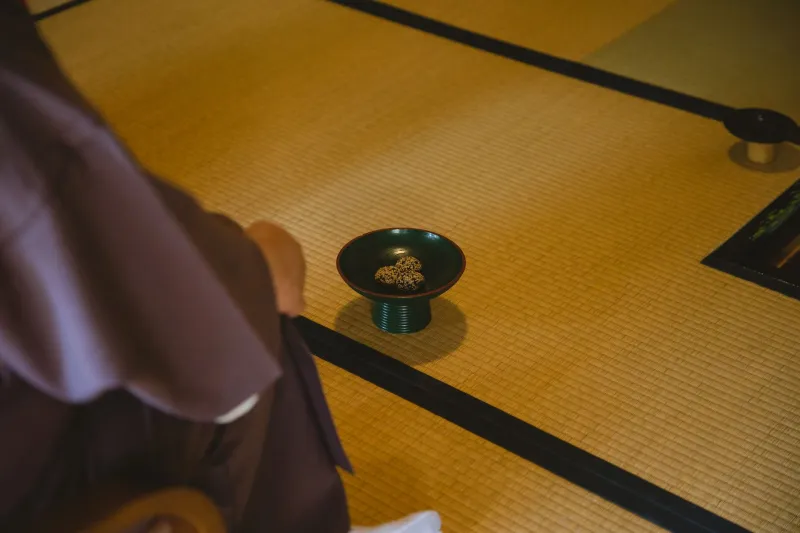
Spend an afternoon in a traditional Kyoto teahouse and you'll start to feel it. The host doesn't announce each step of the ceremony — they perform it, and the performance is the communication. The angle at which the bowl is offered. The particular slowness of a bow. The way a pause before pouring signals that you're meant to look, not talk.
First-timers often describe feeling slightly anxious, like they're missing instructions. But that discomfort is actually the learning. You're being asked to shift modes — from receiving information to reading a room. From listening to watching. It's a different kind of attention, and most of us are out of practice.
Guests who return to Japan often say the teahouse experience changed something in how they have conversations back home. Not because they started bowing or going silent mid-sentence, but because they started noticing what they'd been tuning out — the micro-expressions, the hesitations, the things people almost said.
Southeast Asia's Gentle Redirect
In Thailand, Vietnam, and Bali, the dynamic is different but equally layered. Communication here often runs through warmth rather than formality, but it's no less coded. A guesthouse owner who suggests you try a different restaurant than the one you asked about isn't being dismissive — she's probably steering you away from a tourist trap toward something genuinely good, because she's read that you're the kind of traveler who'd prefer it. You just have to notice that she's doing it.
Same goes for the tuk-tuk driver who pauses before confirming a route, or the market vendor whose smile shifts slightly when you pick up a piece that wasn't made locally. These are invitations — to ask more, to reconsider, to slow down and engage rather than just transact.
Missing them is easy. They don't announce themselves. But catching even a few of them transforms a trip from a checklist into a conversation.
Why Americans Specifically Struggle With This
It's worth naming without judgment: a lot of American travelers arrive in Asia genuinely convinced that if someone had something important to communicate, they'd just say it. This isn't rudeness — it's a reasonable assumption based on how communication works at home. But it creates a kind of perceptual blind spot.
When a Japanese shop owner doesn't correct your fumbled etiquette directly, it can feel like approval. It often isn't — it's courtesy. When a Thai host laughs off a question you asked too bluntly, the laugh is doing real communicative work. It's not dismissal; it's a gentle signal that you've wandered somewhere awkward, and an invitation to find your way back.
The travelers who catch these cues fastest tend to be people who've done some version of this before — actors, therapists, poker players, parents of teenagers. They've already learned that what someone doesn't say can be more informative than what they do. Asia just turns up the volume on that skill, or more accurately, it turns down everything else so you can finally hear it.
The Souvenir Nobody Packs
Here's what's interesting: the travelers who come back from Japan or Southeast Asia most changed often struggle to explain what happened to them. They didn't have a dramatic experience. Nobody said anything profound. But something shifted.
What shifted, usually, is their listening speed. They slowed down. They started noticing the gap between what people say and what they mean. They got more comfortable sitting in ambiguity for a beat before rushing to resolve it. And they started picking up on things in conversations at home that they'd been glossing over for years — a colleague's hesitation before agreeing, a friend's careful word choice, the particular silence that means I'm not sure I want to answer that.
This is the souvenir that doesn't fit in a carry-on. It's also, arguably, the most useful thing you can bring back.
How to Actually Practice It While You're There
You don't need to enroll in a cultural etiquette course. A few simple shifts make a real difference.
First, slow down your responses. When someone in a shop or restaurant says something, resist the American reflex to reply immediately. Let a beat pass. See what else arrives.
Second, watch hands and posture as much as faces. A lot of the meaningful signaling in both Japanese and Southeast Asian communication happens below the neck — in the way someone turns slightly away, or offers something with both hands, or positions themselves relative to the door.
Third, stop treating silence as a problem. In Japan especially, a quiet moment in a conversation isn't a failure — it's often the most thoughtful part. Resist the urge to fill it.
And finally: when something feels slightly off but you can't identify why, trust that instinct. You're probably catching something real. Sit with it a little before you move on.
The Conversation You Didn't Know You Were Having
Asia communicates constantly. It just doesn't always do it in ways that show up on a transcript. The nod that means you're welcome to stay longer. The gentle repositioning of a teacup that means you're holding it wrong, but that's okay. The smile that means I see exactly what you're doing and I'm rooting for you.
These aren't mysteries reserved for cultural insiders. They're available to any traveler who's willing to put down their phone, stop rehearsing their next sentence, and simply pay attention.
The invitation is always there. You just have to show up ready to receive it.