You're Not Lonely — You're Finally Alone: What Asia's Sacred Spaces Are Actually Offering You
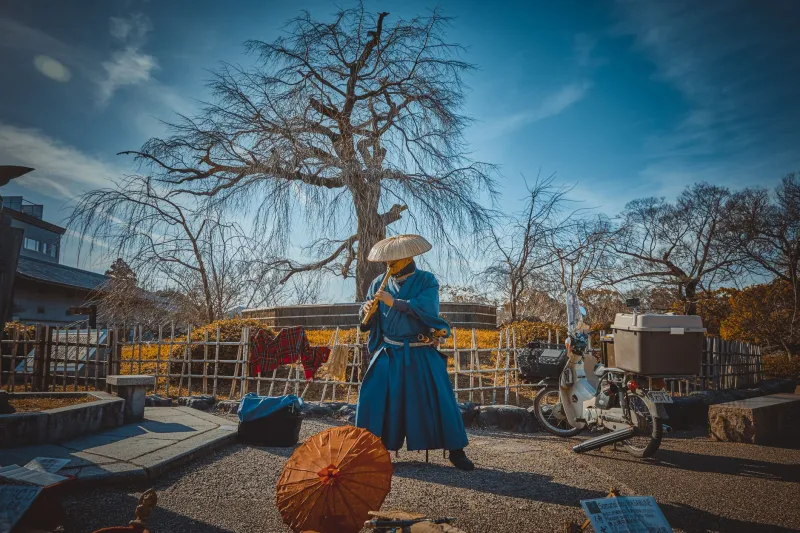
There's a moment that happens to a lot of American visitors somewhere between the Fushimi Inari torii gates and the mossy silence of a Kyoto zen garden. The crowds thin out. The ambient noise drops. Your phone loses its grip on you because there's simply nothing to photograph that the stillness doesn't immediately reclaim. And then it arrives — that hollow, slightly anxious feeling that most of us were trained from childhood to fix as quickly as possible.
We call it loneliness. We reach for our phones. We find a coffee shop.
But here's the thing: what you just felt wasn't loneliness. It was solitude. And in most of Asia's most carefully designed spiritual spaces, that distinction is the entire point.
The American Discomfort With Doing Nothing Together
Back home, silence between people is a problem to be solved. A quiet dinner means something's wrong. A solo walk in the park gets you asked if you're okay. We've built a culture so thoroughly wired for stimulation and social proof that the absence of either reads as a warning sign rather than an invitation.
So when an American traveler steps into a temple courtyard in Chiang Mai or sits beside a raked gravel garden in Arashiyama, the quiet doesn't register as peaceful — it registers as empty. And empty, in the American emotional vocabulary, is pretty much synonymous with bad.
The irony is that these places are full. They're just full of something we don't have a lot of practice receiving.
Designed for Inner Arrival, Not Social Performance
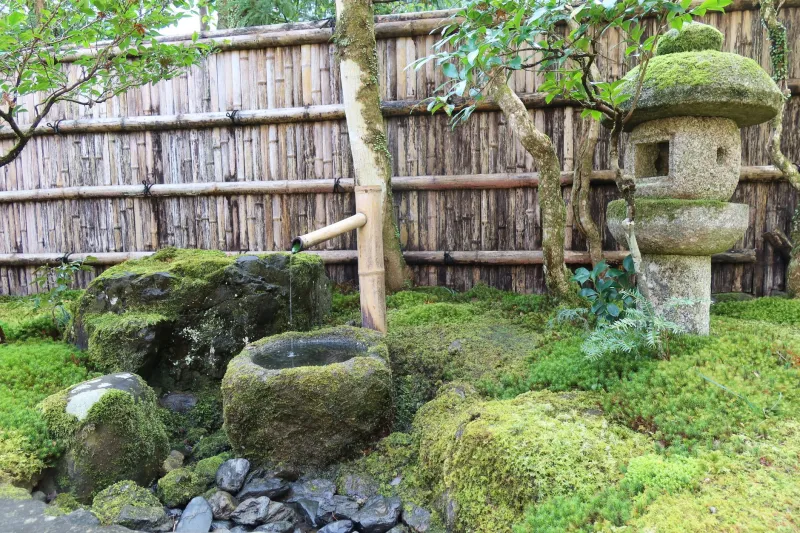
Kyoto's temple gardens weren't landscaped to be Instagrammed, though they certainly photograph well. They were designed — sometimes over centuries — to slow the nervous system down and create conditions for what Japanese aesthetics calls ma: the meaningful pause, the productive emptiness, the space between things where understanding lives.
The borrowed scenery technique in Japanese garden design, shakkei, literally pulls distant mountains or treelines into the composition so that the garden feels continuous with the larger world. You're not enclosed. You're connected — to landscape, to season, to something that extends far beyond the garden wall. That's not isolation. That's perspective.
Similarly, the walled temple compounds of Southeast Asia — whether in Bali, Luang Prabang, or Hoi An — create deliberate thresholds between the noise of daily life and the quieter frequency of inner experience. The architecture isn't saying stay away from people. It's saying come back to yourself first, so you have something real to bring to people.
What Solitude Actually Does to You (When You Let It)
Solitude, the intentional kind, is neurologically different from loneliness. Loneliness is a stress state — your brain reading social disconnection as a threat. Solitude, when chosen and held with some degree of ease, does something closer to the opposite. Studies from places like the University of Rochester have found that people who can tolerate and even enjoy time alone tend to show lower anxiety, stronger self-awareness, and more satisfying relationships when they return to social settings.
Asia's contemplative spaces seem to have understood this long before the research caught up. The solo visitor sitting quietly in front of a Shinto shrine isn't being antisocial. They're doing maintenance. They're defragging. They're becoming someone worth talking to again.
The monks who designed these spaces weren't misanthropes. They were deeply community-oriented people who recognized that the quality of your presence with others depends entirely on your relationship with yourself when no one's watching.
The Moment the Discomfort Becomes a Door
Most travelers who've spent real time in Asia's quieter sacred spaces describe the same arc. First, the discomfort. Then, a kind of fidgeting — checking the phone, looking for someone to make eye contact with, hunting for the exit. And then, if they stay just a little longer than feels comfortable, something shifts.
The garden stops being a place you're visiting and starts being a place you're in. The silence stops being absence and starts being texture. And the self that was so anxious to fill the quiet suddenly has room to say something it's been trying to say for months.
This is what a Balinese tirta water temple is built for. This is what the gravel raking at Ryoanji is pointing at. Not emptiness as deprivation — emptiness as readiness.
One American traveler described sitting alone at a small temple outside Ubud for nearly an hour, having arrived with every intention of taking five photos and moving on. "I didn't plan to cry," she said. "I didn't even know I needed to. But the place just... held space for it somehow."
Bringing It Home Without Losing It at Customs
The challenge, of course, is that the insight evaporates the moment you land back in a world that schedules every 30 minutes and considers a quiet lunch an inefficiency.
But the practice doesn't have to. What Asia's sacred spaces are modeling isn't a geographic experience — it's a relationship with your own interior life that you can tend anywhere. It might look like a ten-minute walk without headphones. A meal eaten without a screen. A Sunday morning where you resist the urge to fill the silence with plans.
The Kyoto garden didn't give you peace. It gave you conditions in which peace was already possible. You brought the rest.
That's worth knowing, whether you're standing between two rows of torii gates at sunrise or sitting in your apartment in Columbus, Ohio, wondering why everything feels so loud.
The Invitation You Might Have Walked Past
Next time you find yourself in one of Asia's quiet spaces — a moss garden, a candlelit shrine, a temple courtyard where the only sound is wind moving through bamboo — try staying a few minutes past the point where you'd normally leave.
Not because something dramatic is going to happen. But because the discomfort you feel in that extra five minutes is the exact place where the loneliness ends and the solitude begins.
And the difference, once you've felt it, is something you carry home in your chest rather than your carry-on.