What Happens When Nobody Talks: The Quiet Power Asia Has Been Sitting With for Centuries

There's a moment in a Kyoto meditation session — usually around the seven-minute mark — when an American traveler's face shifts. The eyes stop drifting. The shoulders drop maybe half an inch. And then, almost involuntarily, a kind of panic sets in. Not the dramatic kind. The quiet, creeping kind that makes you suddenly very aware of your own breathing, your own thoughts, and the fact that nobody is saying anything, and nobody seems bothered by that except you.
That moment is worth paying attention to.
Because what you're experiencing isn't just discomfort with quiet. It's the collision between two completely different understandings of what silence is for.
Silence as Language, Not Absence
In the West — and especially in American professional culture — silence tends to read as a gap. Something went wrong. Someone forgot their line. The Wi-Fi cut out. We fill it reflexively: with filler words, with laughter, with "so anyway," with the sound of our own voices reassuring us that yes, we are still here, still relevant, still in control of the room.
In much of Asia, that instinct is either absent or actively trained out of people.
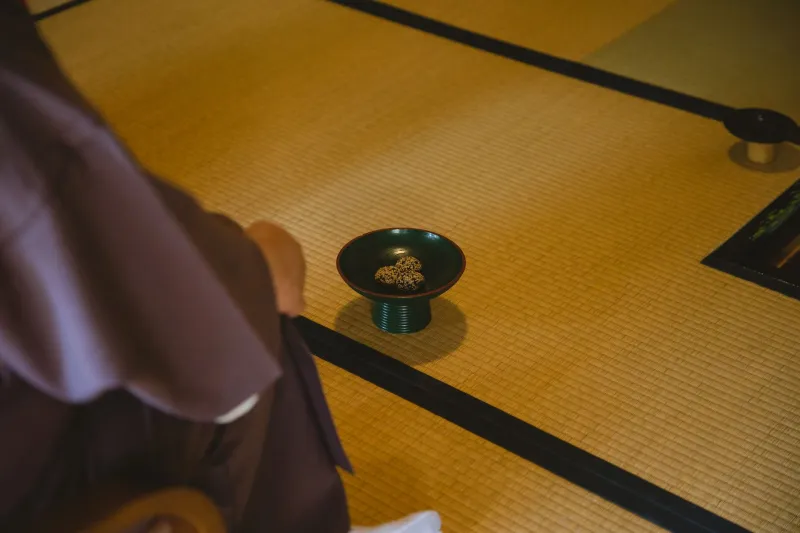
In Japan, ma (間) is the concept that governs this. Usually translated as "negative space" or "pause," it operates across architecture, music, theater, and conversation alike. It's not the absence of sound — it's the presence of something unsaid, something felt, something that words would only diminish. A Noh theater performer understands that the held breath before a movement carries more emotional weight than the movement itself. A tea ceremony host knows that the pause before pouring is part of the hospitality.
This isn't metaphor. It's craft.
Across Southeast Asia, the relationship with silence takes slightly different forms but carries similar weight. In Theravada Buddhist traditions practiced widely in Thailand, Myanmar, and Cambodia, structured silence during meditation retreats isn't just a rule — it's a technology. Silence removes the noise that obscures what's actually happening in your own mind. Monks who've practiced for decades describe silence not as something you endure but something you eventually learn to use, the way a carpenter learns to use a particular chisel.
Vipassana retreats — which draw thousands of Americans every year to places like Chiang Mai and Bali — ask participants to observe noble silence for ten days. No talking, no phones, no eye contact. The first three days, most Western participants quietly lose their minds. By day six, something else is happening entirely.
What the Discomfort Is Actually Telling You
Here's the part that travel writing usually skips: the reason silence feels threatening to most Americans isn't cultural laziness or simple habit. It's that silence creates a vacuum, and vacuums get filled — by your own unprocessed thoughts, your unresolved anxieties, the things you've been successfully outrunning with a packed schedule and a full inbox.
Asia's contemplative traditions have understood this for a long time. Silence isn't peaceful by default. It's revealing. Which is precisely why it's valuable, and precisely why it's uncomfortable.
Kyoto's Zen temples are designed with this in mind. The raked gravel of Ryoanji's rock garden offers nothing to interpret, nothing to consume, nothing to Instagram your way through. You stand there, and whatever you brought with you — stress, grief, a argument you're still rehearsing in your head — surfaces on its own. The garden didn't do that. The silence did.
Southeast Asian spirit houses, the small shrines found outside homes and businesses across Thailand and Laos, are visited with offerings but rarely with words. The communication happens in gesture, in presence, in the act of showing up quietly. There's an understanding baked into the ritual that some things don't need to be articulated to be real.
The Professional Case for Strategic Quiet
Bring this back to a conference room in Chicago or a Zoom call with twelve participants, and the implications get interesting fast.
Negotiation coaches — particularly those who work with clients doing business in Japan or across Southeast Asia — will tell you that American professionals almost universally break silence too early. A Japanese counterpart pauses after a proposal not because they're confused or stalling, but because they're genuinely processing, weighing, giving the idea room to breathe before responding. The American across the table, reading that pause as uncertainty or dissatisfaction, rushes to fill it. They clarify something that didn't need clarifying. They offer a concession nobody asked for. They talk themselves out of a better deal.
The same dynamic plays out in presentations. Research on public speaking consistently shows that deliberate pauses — the kind that feel uncomfortably long to the speaker — land as confident and authoritative to the audience. The pause says: I'm not afraid of this room. I'm not afraid of what I just said. I'll wait while you catch up. It's the verbal equivalent of ma. Most American presenters never let themselves find out what that feels like because they're too busy filling the air.
In relationships, silence carries its own currency. Couples therapists often note that the most productive sessions aren't the ones with the most talking. The ability to sit with someone in quiet — without needing to perform connection, without needing to narrate every feeling — is a form of intimacy that takes practice. It's not distance. It's trust.
Learning to Sit Still Long Enough to Hear It
None of this means you need to book a ten-day silent retreat in northern Thailand to get the point (though honestly, you could do worse). What it means is that the next time you're in a conversation — professional, personal, or somewhere in between — and a silence opens up, try something counterintuitive: don't close it.
Just wait. See what comes.
In Kyoto, there are gardens built specifically to make you do this. In Chiang Mai, there are temples where monks move through their morning routines in complete quiet and somehow make you feel more welcome than any guided tour ever has. In Bali, the space between gamelan notes is considered as sacred as the notes themselves.
The silence isn't nothing. It's the part that holds everything else together.
And if sitting in it makes you uncomfortable — good. That discomfort is information. It's telling you something your calendar has been too loud to let you hear.
The question is whether you're ready to stop talking long enough to find out what it is.