Nothing Lasts, and That's the Point: How Asia's Seasons Are Teaching Americans to Stop Gripping So Tight
There's a particular kind of stress that only Americans seem to bring to a vacation. You can spot it at the airport: the color-coded packing cubes, the laminated itineraries, the pre-downloaded offline maps for cities that haven't even been landed in yet. We plan because uncertainty feels like a problem to be solved. We schedule because open space on a calendar looks like failure.
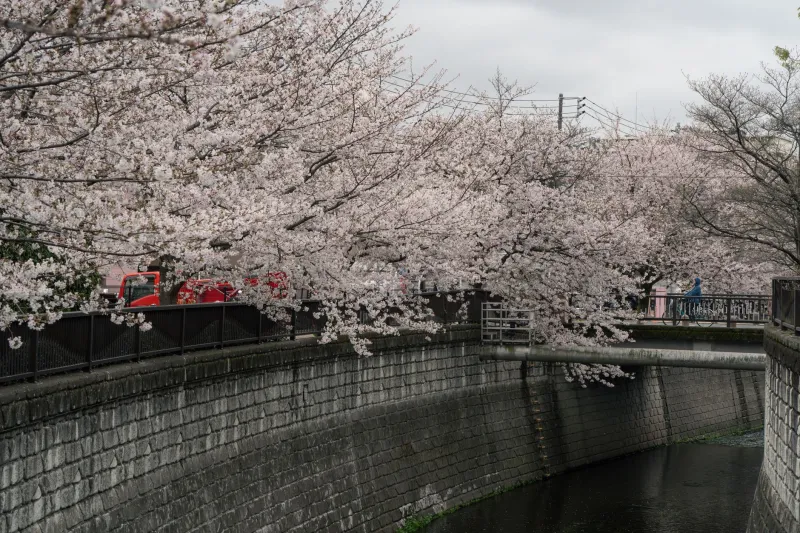
And then you land somewhere like Kyoto in early April, and the cherry blossoms are already falling.
You didn't miss them, exactly. You're right on time. But they're going. Petals drifting into the canal along Okazaki, collecting in pale pink drifts against stone walls, dissolving into the current before you can even decide whether to photograph them. And the locals? They're not panicking. They're sitting on tarps under the trees, eating convenience store snacks and drinking canned beer, looking completely at ease with the whole gorgeous, fleeting mess.
That's the thing Asia keeps trying to tell us. Impermanence isn't the tragedy. Resisting it is.
The Philosophy Built Into the Petals
The Japanese concept of mono no aware — loosely translated as the bittersweet awareness of impermanence — isn't just a poetic idea. It's structural. It's baked into the calendar, the architecture, the seasonal menus at every kaiseki restaurant in Kyoto. When Kinkaku-ji glows gold against a November sky full of turning maples, that moment is considered more beautiful because it won't look like that again until next year. The temple didn't change. The season did. And that's the whole point.
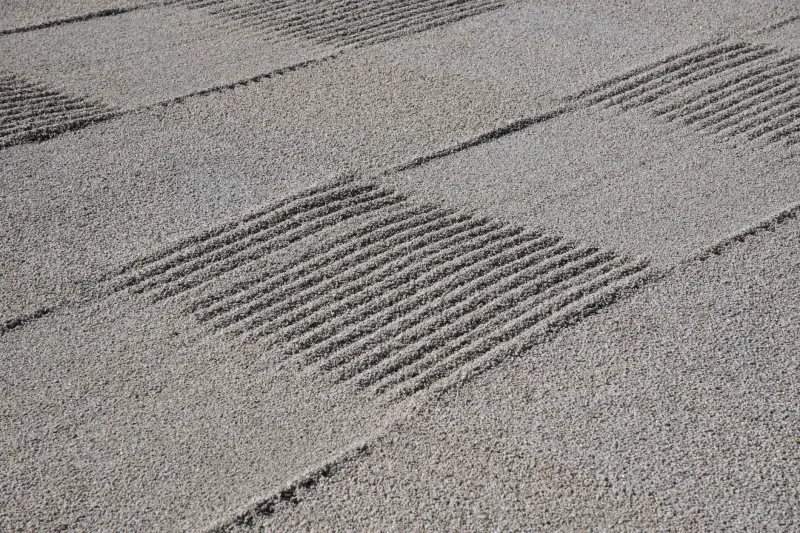
Ryoan-ji's famous rock garden doesn't bloom or fade, but it operates on the same logic. The raked gravel shifts with light and weather. Early morning fog makes it look like something from a dream. Midday sun turns it stark and almost confrontational. You can't pin it down. Every visit is technically a first visit, because you're never the same person twice and neither, in its quiet way, is the garden.
For Americans raised on the idea that good things should last — that quality means durability, that love means forever, that a great vacation memory should be perfectly preserved in a highlight reel — this is genuinely disorienting. And also, if you let it, genuinely freeing.
Monsoon Season Isn't a Problem to Work Around
Fly into northern Thailand or Luang Prabang, Laos, during rainy season and you'll meet two kinds of travelers. The first type is furious. They researched the wrong months, the sky opened up every afternoon, and they're stress-eating pad see ew in their guesthouse waiting for it to stop. The second type figured something out: the rain is the attraction.
Southeast Asia's wet season transforms places in ways that no travel brochure bothers to mention. Waterfalls that are barely a trickle in February become something close to biblical by September. Rice paddies turn a green so saturated it looks fake. The air after a monsoon downpour in Chiang Mai smells like earth and flowers and something ancient that no candle company has successfully bottled. The light, when it returns, is extraordinary.
Local life doesn't pause for the rain, either. Markets stay open under tarps. Street food vendors work through the drizzle. Temple courtyards fill with the sound of water hitting stone rooftops in rhythms that feel almost composed. If you stop treating the weather as an obstacle, it starts to feel like a collaborator.
That reframe — from obstacle to collaborator — is exactly what Asia's seasonal culture is offering anyone willing to receive it.
Impermanent Art as a Practice
Kyoto's temples have long hosted seasonal art installations that are explicitly designed to disappear. Moss gardens are understood to be living things that will look different every single visit. Ikebana arrangements wilt within days; that's not a flaw in the craft, it's the craft. Sand mandalas, a tradition that crosses from Tibetan Buddhist practice into parts of Southeast Asian ceremony, are painstakingly constructed over days or weeks and then ritually destroyed. The destruction is the completion.
For a culture that frames preservation as the highest form of respect — museum glass, archival storage, NFTs — this is almost incomprehensible. We want to keep things. We want to protect them from time. Asia keeps gently suggesting that the attempt to freeze something beautiful is also, in a way, a failure to really experience it.
There's a small temple in Kyoto's Arashiyama district that holds a bamboo grove behind it. Tourists photograph it constantly, trying to capture the specific quality of filtered light through the stalks. Almost none of the photos do it justice, because the thing that makes it extraordinary is the sound — wind through thousands of hollow stalks, a low, resonant rustling that changes with every gust. You can't save that sound. You can only stand there and let it happen to you.
What This Actually Looks Like Back Home
None of this requires a plane ticket to practice, but the plane ticket helps. Something about being removed from your routines, your responsibilities, and your optimized productivity apps makes the lesson land differently.
Travelers who spend real time in Kyoto or Southeast Asia often come back with what they describe as a looser grip. Not passivity — these aren't cultures that shrug at everything — but a different relationship to outcomes. You make your best effort and then you release it. You plan the trip and then you let the trip happen. You love the thing without needing to own it forever.
In practical terms, that might mean booking fewer must-see sites per day and leaving room for the unexpected alley, the unplanned conversation, the afternoon that goes sideways in the best possible way. It might mean sitting with a difficult work situation long enough to see what it becomes rather than immediately trying to resolve it into certainty.
It might just mean standing under a tree in April and watching the petals fall without reaching for your phone.
The Uncomfortable Gift
Uncertainty, in most American contexts, is a thing to be managed. Therapy, productivity systems, financial planning, five-year goals — we have entire industries built around reducing the feeling that things are out of our control. And some of that is genuinely useful. But Asia's seasonal wisdom suggests that a life with no tolerance for impermanence is also a life with no capacity for wonder.
The cherry blossoms matter because they leave. The monsoon is beautiful because it's temporary. The sand mandala means something because it will be swept away.
You don't have to agree with all of it. You don't have to come back a changed person with a new relationship to control and a bamboo wind chime on your porch. But if you go — to Kyoto in spring, to Luang Prabang in September, to any place that operates on a seasonal clock older than your planning app — pay attention to how it feels when you stop trying to hold on.
That feeling has a name in Japanese. And it's considered one of the most beautiful things a person can experience.