From Kyoto Basements to Bangkok Stages: The Unlikely Musical Thread Connecting Japan and Southeast Asia
The Room Under the Ramen Shop
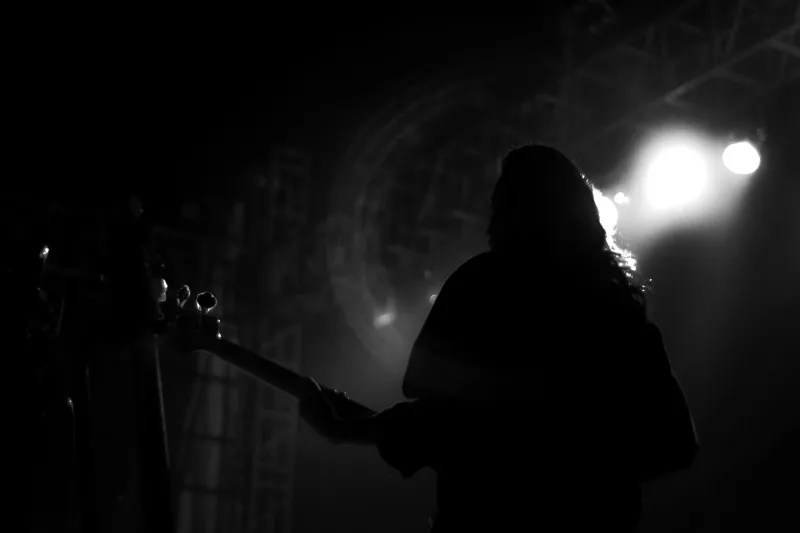
There's a live house in Kyoto's Shimogyo ward that seats maybe 80 people on a good night. The ceiling is low, the PA system has seen better days, and the bartender doubles as the sound engineer. On any given Friday, you might catch a math-rock trio, a lo-fi bedroom pop act, or an experimental noise artist who's flown in from overseas. This is not the Kyoto you'll find in a travel brochure.
But here's the thing — musicians from Chiang Mai to Ho Chi Minh City know this room. Or rooms like it. Because for the past two decades, Kyoto's underground music scene has functioned as something like a graduate school for Southeast Asian artists hungry for a specific kind of authenticity. Not the polished, major-label aesthetics of Tokyo, but something rawer, more community-driven, and deeply rooted in place.
"Kyoto has this particular energy that Tokyo doesn't," says Aom Watcharaporn, a Bangkok-based guitarist who spent three months gigging around the Kansai region in 2018. "It's slower. More deliberate. The musicians there are thinking about what they're doing, not just chasing trends. That changed how I approach my own writing."
Why Kyoto, Not Tokyo?
Most conversations about Japan's influence on Asian pop culture start and end in Tokyo — and understandably so. But Kyoto operates on a different frequency. The city's identity is wrapped up in preservation, in craft, in the idea that doing something well over a long period of time matters more than doing it loudly. That philosophy has seeped into its music scene in ways that are hard to quantify but easy to feel.
Venues like Nijo Nano, Metro Kyoto, and the now-legendary (and sadly shuttered) Urbanguild became informal embassies for a certain kind of sound — one that borrowed from post-rock, Japanese city pop, traditional folk structures, and noise experimentation all at once. These weren't trend-chasing spaces. They were incubators.
Somchai Lerdsuk, who books acts for a mid-sized venue in Bangkok's Ekkamai neighborhood, made his first trip to Kyoto in 2014 on what he calls "a music pilgrimage." He returned with a notebook full of ideas about how to run a venue, not just book shows.
"I was watching how the venue owners talked to the artists, how they curated the lineup so different acts would actually speak to each other," he says. "In Bangkok at the time, we were just filling slots. Kyoto taught me that a lineup is a conversation."
The Exchange Goes Both Ways
It would be too easy — and frankly a little reductive — to frame this as a one-directional cultural export from Japan outward. The reality is messier and more interesting. Southeast Asian musicians who absorbed Kyoto's indie ethos brought their own regional sounds back into the mix, creating feedback loops that have genuinely altered both scenes.
Vietnam's Hanoi-based band Ngọt, widely credited with helping launch a new wave of Vietnamese indie rock, has cited Japanese influences openly — but the band's sound is unmistakably rooted in Vietnamese melodic sensibilities and lyrical traditions. Their breakout track "Có Chắc Yêu Là Đây" went viral across Southeast Asia in 2019 and drew comparisons to Japanese indie acts like Spitz and Quruli. But listen closely and you'll hear something that couldn't have come from anywhere but Hanoi.
In Indonesia, the story takes a different shape. Bandung — often called the country's music capital — has had an ongoing cultural dialogue with Japan for decades, particularly through the punk and hardcore scenes. But younger artists in Jakarta are increasingly pointing to Kyoto-adjacent aesthetics: slower tempos, more atmospheric production, a willingness to sit in discomfort rather than resolve it.
"There's a Japanese concept, 'ma,' which is about the space between sounds," explains Dinda Ramadhani, a Jakarta-based producer who studied sound design in Osaka. "A lot of Indonesian pop is very full, very busy. I came back wanting to leave more space. That's a very Kyoto idea."
Finding These Scenes as a Traveler
For US visitors who want to experience this cultural undercurrent firsthand, the good news is that both Kyoto and its Southeast Asian counterparts are more accessible than ever — if you know where to look.
In Kyoto, skip the tourist-facing izakayas and head to the live houses clustered around the Kawaramachi and Gion areas after 9 p.m. Check local listings on Pia or follow venue Instagram accounts for show announcements. Most shows run between ¥1,500 and ¥3,000 at the door — that's roughly $10 to $20, which is a bargain by any American standard.
In Bangkok, the Ekkamai and Ari neighborhoods have become hubs for the kind of indie scene that owes a quiet debt to Japan. In Ho Chi Minh City, the Bui Vien area gets all the attention from tourists, but the real action for indie music is happening in District 3. And in Jakarta, the South Jakarta neighborhood of Kemang has a cluster of small venues hosting everything from jazz to noise rock on weekend nights.
A Map Without Borders
What's most striking about this cultural exchange is how little of it has been formally documented or institutionalized. There are no exchange programs, no official cultural partnerships driving it. It's happening through Instagram DMs, shared SoundCloud playlists, and musicians crashing on each other's floors between gigs.
In that sense, it mirrors the spirit of Kyoto's underground scene itself — organic, community-driven, resistant to easy categorization. For American travelers used to thinking about Asia in broad strokes, this is an invitation to zoom in. The connections between a basement venue in Shimogyo and a rooftop bar in Chiang Mai aren't obvious. But once you hear them, they're everywhere.